

SUVs from Toyota, like the RAV4, Highlander, 4Runner, and Sequoia, have become popular for their long-term dependability, durability, and safety ratings. These features frequently affect the cost of SUV insurance. Common factors that insurance companies evaluate include the vehicle’s safety features, repair costs, claim history, driving conditions, and risk exposure. Toyota SUVs typically fall in a moderate-to-lower insurance category due to their design, construction strength, and safety performance, even though every driver has different personal requirements.
It’s helpful to understand the insurance principles that affect each automobile’s type before looking into ways to reduce premiums. During the insurance process, terms like liability insurance, deductibles, collision coverage, comprehensive coverage, rates, and policy boundaries regularly come up. All policy decisions are based on these terms.
You can also analyze how Toyota Car Insurance provides coverage in various scenarios at general protection features across Toyota models:
→ 10 Surprising Ways Toyota Car Insurance Protects You
Why Toyota SUV Insurance Is Frequently Cheaper
SUVs with high ratings from the Insurance Institute for Highway Safety or the National Highway Transportation Safety Administration (NHTSA) typically have fewer injury claims, which can directly lower insurance costs. Toyota vehicles frequently perform highly on accident tests due to characteristics like:
- Emergency braking that operates automatically
- Several airbag systems
- Help with maintaining the lane
- Systems for stability control
- Immobilizers that prevent theft
These safety features naturally lower risk, which could affect the price of Toyota insurance costs overall.
If you want to understand how these safety elements translate into real coverage advantages, this breakdown explains important benefits included in Toyota insurance policies:
→ Toyota Vehicle Insurance: 9 Proven Benefits
Key Terms You Must Know Before Buying SUV Insurance
Below are essential insurance terms explained in simple language:
| Term | Meaning |
| Premium | The monthly or annual premium for SUV insurance. |
| Deductible | What you have to spend out of pocket before your insurance pays for a claim. |
| Liability Coverage | When you are at fault, liability insurance protects others from harm or injury. |
| Collision Coverage | Repairs for your Toyota cars after an accident are covered under collision coverage. |
| Comprehensive Coverage | Extensive Coverage includes coverage for non-collision incidents like weather, theft, and vandalism. |
| Claim History | Your prior insurance claim history may have an impact on the cost. |
| Limitations on Coverage | maximum amount that an insurance will pay for injuries or damages. |
Comprehending these facilitates clear policy evaluation and enhances decision-making.
You can check out the following material from the Insurance Material Institute for broad definitions of common insurance terms:
https://www.iii.org/article/auto-insurance-basics
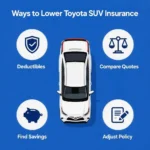
9 Proven Ways to Lower Toyota SUV Insurance Costs
This section discusses possible strategies to lower auto insurance premiums without losing sufficient coverage. Regardless of the model year or area, these methods are typically suitable for Toyota SUVs.
1. Examine Several Insurance Companies
The cost of insurance varies greatly between providers. The cost of premiums, deductibles, and certain coverage options can vary even across similar policies. The average cost of Toyota SUV insurance can be better understood by using comparison tools, visiting official websites, or reading independent insurance studies.
2. Benefit from Toyota Safety Discounts
Insurance companies may classify the safety features that Toyota cars frequently include as risk-reducing.
characteristics like:
- Cruise control that adapts
- Checking blind spots
- Pre-collision mechanisms
- Alerts for reverse cross-traffic
These characteristics might be eligible for safety-based insurance price modifications. The insurer’s evaluation, the programs offered, the car’s year, and the technology package all affect this.
3. Efficiently Raise Your Deductible
Increasing the deductible usually results in lower monthly or annual premiums. However, your ability to handle out-of-pocket costs during a claim and your degree of financial tolerance should be taken into consideration. A balanced deductible provides correct insurance without adding needless cash stress.
4. Combine Home or Rental Insurance
When combining auto insurance with homeowners’ or renters’ coverage, several insurers provide multi-policy options that modify the cost. Bundling may make policy management easier and result in organized pricing even while policies vary.
5. Get a Better Driving Record
Overall, insurance risk is increased by driving mistakes, accidents, and frequent claims. Maintaining a good driving record is facilitated by using safe-driving programs, following traffic laws, and improving driving habits. More stable premium prices are frequently associated with clean records.
6. Install Anti-Theft & Tracking Systems
SUVs equipped with tracking systems or additional immobilizers may be less targeted for theft, which insurers consider while assessing risk. Toyota SUVs often include a factory security system, but supplemental equipment can strengthen security.
7. Make use of usage-based or pay-per-mile vehicle insurance
Policies based on sensors or mileage are available from certain insurers. These apps track time of day, braking, acceleration, and driving distance. These options might be helpful for Toyota SUV customers who drive fewer miles or follow regular driving habits.
8. Select the Right Toyota Coverage
Unnecessary expenses are decreased by choosing suitable insurance levels depending on the value of the car, the driving environment, and individual needs. For instance:
- Full collision insurance might not be necessary for older SUVs.
- Certain types of protection may be advantageous for cars with high mileage.
- Urban environments may require broader protection due to traffic exposure.
9. Requests for Loyalty and New Customer Modifications
Rates and qualifying conditions are updated regularly by insurance companies. Every year, it’s helpful to look at policy modifications and ask for justifications for any adjustments in premiums. Changes can occasionally be made when updating information or changing insurance companies.
What Affects the Cost of Your Toyota Insurance?
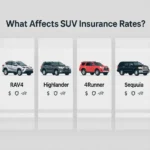
Insurance companies take into account both personal and vehicle-related aspects. Each Toyota SUV, including the RAV4, Highlander, 4Runner, and Sequoia, has unique features that affect premium estimates.
The Significance of Age, Location, and Driving Experience
- Urban locations may lead to higher premiums due to traffic volume.
- Younger drivers often face higher risk assessments.
- A clean driving record typically supports more stable insurance pricing.
A related overview on this topic shows how different insurance factors influence driver quotes and why premiums can change from year to year:
→ How Can 5 Secrets Slash Your Toyota Insurance Quote Fast?
How Rates Are Affected by Your Toyota Model
Because of their size, design, and normal use, different Toyota SUVs have varying insurance cost patterns.
| Toyota Model | Typical Cost Influence | Reference Notes |
| RAV4 | Lower repair costs, strong safety ratings | Based on common insurer data and NHTSA safety information |
| Highlander | family-friendly use, moderate claims | Insurance trend reports |
| 4Runner | Off-road use increases risk factors | Vehicle usage studies |
| Sequoia | A larger size may influence liability calculations | General SUV insurance analysis |
The safety ratings mentioned in this table can be viewed through the National Highway Traffic Safety Administration database:
https://www.nhtsa.gov/ratings
Impact of Annual Mileage and Credit Score
Credit score and annual mileage can occasionally affect price increases. Decreased chances of accidents may be measured by lower mileage, and more consistent premium assessments may be supported by increased financial stability.
The Best Toyota SUVs with Cheap Insurance
The following sections analyze how popular Toyota autos interact with insurance factors naturally.
Toyota RAV4: Strong Safety Ratings and Reasonably Priced Protection
- Usually, the RAV4 is in a lower insurance category because of:
- High safety ratings from the NHTSA
- Lower-than-normal repair expenses
- Moderate car weight
- Widespread access to replacement components
Toyota Highlander: Reduced Family Premiums
Families frequently favor the Highlander, which has been classified as having moderate risk by insurers. expected insurance patterns are maintained through fair accident numbers and consistent safety performance.
Toyota 4Runner: Off-Road SUV With Moderate Insurance Costs
While maintaining excellent safety ratings, the 4Runner’s strong frame and off-road performance raise insurance worries due to environmental risk.
Toyota Sequoia: Coverage Options for Large SUVs
The Sequoia’s larger frame influences insurance calculations because of the possible effect of power and repair cost problems. Its robust construction and safety features, however, ensure steady long-term performance.
Cost Comparison Table:
| Toyota SUV | Estimated Annual Premium Range | Data Reference |
| RAV4 | $1,350 – $1,650 | Based on aggregated insurer reports |
| Highlander | $1,450 – $1,750 | Insurance cost trend publications |
| 4Runner | $1,500 – $1,900 | Off-road insurance statistical summaries |
| Sequoia | $1,650 – $2,000 | Large SUV insurance categories |
These estimated insurance ranges are based on publicly available data from consumer insurance studies, which can be explored here:
https://www.valuepenguin.com/auto-insurance
Expert Advice for 2025 Insurance Savings
- Every year, review the policies.
- Keep up good safety practices.
- When necessary, use telemetry programs.
- Maintain mileage records.
- Observe the manufacturer’s maintenance recommendations.
You can also see how insurance adjustments affect Toyota sedan owners, since many of the same principles apply to SUVs as well:
→ Toyota Camry Insurance Rates: 6 Expert Tips to Save Big
FAQs
Are Toyota SUVs less expensive to insure?
This depends on the model and the location of the car. Although size and maintenance are important factors. And many Toyota SUVs perform well, which can help lower insurance costs.
Does the age of a Toyota affect the cost of insurance?
Yes. Older automobiles may have lower replacement values and thus be less expensive to insure.
How does mileage affect insurance price?
Minimum annual miles generally decreases the likelihood of collisions. And in this way, this impacts the premium
Does a Toyota SUV need comprehensive coverage?
Usage trends, individual tastes, and financial needs all come into play.
Which Toyota has the cheapest insurance?
RAV4 usually maintains lower insurance rates because of its safety performance and the cost of repairs
Conclusion
Because of their continuous performance histories, structural dependability, and safety ratings, Toyota SUVs offer balanced insurance performance. The methods mentioned above help in understanding policy possibilities, learning cost considerations, and identifying options for useful coverage alterations. Every step helps make better decisions for Toyota SUV insurance in 2025, whether it’s choosing the right policy, comparing insurers, or comprehending risk factors.